
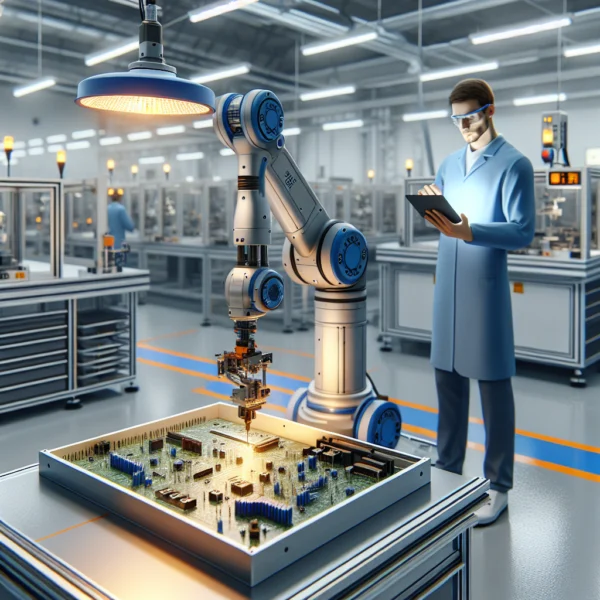
Cobot DIY Robotics Solutions for SMEs
Small and medium-sized enterprises (SMEs) often struggle with automation. They face challenges such as high initial costs and complex programming requirements. Traditional industrial robots are frequently overkill. Collaborative robots, or cobots, offer a compelling alternative. Cobots are designed to work alongside humans. This allows for flexible and scalable automation solutions. DIY cobot robotics solutions are becoming increasingly popular among SMEs. They offer a cost-effective entry point into automation.
The Problem: Automation Barriers for SMEs
SMEs often operate with limited budgets and resources. Implementing complex automation systems is a significant investment. Traditional industrial robots typically require specialized programming skills. Finding and retaining qualified robotics engineers can be difficult. This creates a barrier to entry for many SMEs. Many processes in SMEs are also low-volume and high-mix. This requires a flexible automation solution. Traditional robots are not easily adaptable to these changing needs.
Safety is another crucial consideration. Traditional robots often require safety cages. These cages can take up valuable floor space. Cobots are designed with safety in mind. They incorporate force-sensing technology. This allows them to stop safely if they encounter an obstruction. This eliminates the need for bulky safety cages in many applications. The lack of skilled personnel, coupled with the cost and complexity of traditional automation, hinders productivity growth in SMEs.
Cobots: A Technical Solution and Growing Trend
Cobots represent a significant advancement in robotics technology. They offer a blend of safety, flexibility, and ease of use. Their design allows them to work directly with humans. This fosters a collaborative work environment. Force and torque sensors are key components. They enable the cobot to detect collisions and react accordingly. This inherent safety feature differentiates them from traditional industrial robots.
Simplified Programming Interfaces
Cobots feature intuitive programming interfaces. These interfaces often use drag-and-drop programming. This simplifies the programming process. Employees without extensive robotics experience can learn to program cobots. This reduces the reliance on specialized robotics engineers. Some cobots even support programming by demonstration. Users can physically guide the cobot through the desired movements. The cobot then records and repeats these movements automatically.
DIY Cobot Kits and Ecosystems
The rise of DIY cobot kits is further democratizing automation. These kits offer pre-packaged components and software. This streamlines the integration process. They often include detailed instructions and tutorials. This makes it easier for SMEs to implement cobot solutions. Online communities and forums provide support and knowledge sharing. This fosters a collaborative learning environment. The growing ecosystem of accessories and software expands the capabilities of cobots. These resources offer a wide range of solutions for specific applications. See examples at Universal Robots and Rethink Robotics (now defunct, but valuable for historical context).
Implementing DIY Cobot Solutions: Practical Advice
Successfully implementing a DIY cobot solution requires careful planning. Start by identifying specific tasks suitable for automation. Consider tasks that are repetitive, ergonomically challenging, or require high precision. Conduct a thorough risk assessment. Ensure that the cobot solution meets all safety requirements. Select a cobot that is appropriate for the payload and reach requirements of the application.
Step-by-Step Implementation
Begin with a pilot project. This allows you to test the cobot in a controlled environment. Fine-tune the programming and integration. Train employees on how to operate and maintain the cobot. Gradual deployment helps to minimize disruption and build confidence. Ongoing monitoring and evaluation are essential. Track the performance of the cobot. Identify areas for improvement. Continuously optimize the process to maximize efficiency. Consider safety training from a reputable provider, such as OSHA.
Integrating Peripherals and Software
Many applications require integrating peripherals. Examples include grippers, vision systems, and conveyors. Select peripherals that are compatible with the cobot. Ensure seamless integration through appropriate software and drivers. Cloud-based software platforms offer remote monitoring and control. This allows for real-time data analysis and optimization. Choose software solutions that integrate well with existing business systems.
Applications in SMEs
Cobots are finding applications in various SME sectors. These include manufacturing, assembly, and packaging. In manufacturing, cobots can automate tasks such as machine tending and quality inspection. In assembly, they can assist with intricate assembly operations. They can also handle repetitive tasks like screw driving. In packaging, cobots can automate packing, palletizing, and labeling. The versatility of cobots makes them suitable for a wide range of industries. Consider applications in welding, polishing, and even laboratory automation.
One popular application is pick and place. Cobots can accurately pick items from one location and place them in another. This is useful for automating tasks like kitting and order fulfillment. Cobots can also be used for dispensing adhesives and sealants. This ensures consistent and precise application. SMEs are increasingly using cobots for collaborative tasks. Humans and cobots work together to complete complex tasks more efficiently.
Conclusion: Empowering SMEs with Cobot Robotics
DIY cobot robotics solutions offer a compelling value proposition for SMEs. They provide a cost-effective and accessible entry point into automation. Cobots are easy to program and safe to operate. They can automate a wide range of tasks. By implementing cobot solutions, SMEs can improve productivity, reduce costs, and enhance workplace safety. As the technology continues to evolve, cobots will play an increasingly important role in empowering SMEs to compete in the global marketplace. The future of manufacturing for SMEs is intertwined with the adoption of collaborative robotics. Continued education and exploration in this area will yield significant benefits.
🛠️ $5,000 Tool for your Cobot?
Why overspend? Turn hand tools you already own into precision cobot tools.
Our universal adapters let you mount standard grinders, sanders, and drills to your collaborative robot in minutes.
Leave a Reply