
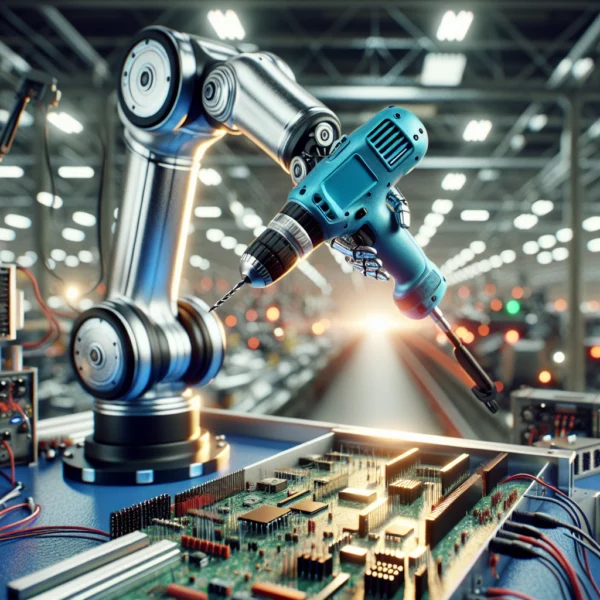
Manufacturing is constantly evolving. Efficiency and automation are key. Cobots (collaborative robots) are revolutionizing production lines. They offer a flexible and cost-effective automation solution. This article explores cobot retrofitting for existing hand tools. We will discuss technical solutions, implementation advice, and the future of this trend.
The Challenge: Integrating Cobots with Legacy Tools
Many factories have existing hand tools. These tools represent a significant investment. Replacing them with fully automated systems can be expensive. Furthermore, complete system overhauls disrupt production. Cobot retrofitting offers a practical alternative. It allows manufacturers to leverage existing tools while gaining the benefits of automation.
However, retrofitting presents challenges. Existing tools are designed for manual operation. They lack the interfaces required for robotic control. Adapting these tools to work with cobots requires careful planning. It also needs specialized hardware and software solutions.
Understanding the Benefits of Cobot Retrofitting
Retrofitting offers numerous benefits. It reduces capital expenditure. It minimizes disruption to existing workflows. It also increases productivity. Cobots can perform repetitive or physically demanding tasks. This frees up human workers for more complex jobs. This enhances job satisfaction and reduces the risk of injuries.
Improved accuracy is another advantage. Cobots offer consistent performance. They eliminate human error. This leads to higher quality products and reduced scrap rates. Cobot retrofitting improves overall operational efficiency.
Technical Solutions and Trends in Cobot Retrofitting
Several technical solutions enable cobot retrofitting. These solutions vary in complexity and cost. The best approach depends on the specific tool and application.
Custom End-of-Arm Tooling (EOAT)
EOAT is crucial for successful retrofitting. It is the interface between the cobot and the hand tool. Custom EOAT can be designed to grip and manipulate existing tools. Considerations include weight, size, and the force required to operate the tool. Grippers, force sensors, and quick-change mechanisms are common components. Companies like Robotiq offer a wide range of EOAT solutions. Robotiq Website is a good starting point.
3D printing is playing a significant role in EOAT design. It allows for rapid prototyping and customized solutions. Engineers can quickly iterate on designs and optimize them for specific applications. This reduces development time and costs.
Sensor Integration for Enhanced Control
Integrating sensors enhances cobot control. Force sensors provide feedback on the tool’s interaction with the workpiece. Vision systems enable precise positioning and alignment. These sensors provide real-time data. This allows the cobot to adapt to variations in the environment.
For example, a force sensor can prevent over-tightening screws. A vision system can guide the cobot to the correct location on a part. This level of control is essential for complex assembly tasks.
Developing Control Software and Interfaces
Control software is the brain of the retrofitted system. It coordinates the movements of the cobot. It also integrates data from sensors. Programming the cobot can be done using various methods. These include teach pendants, offline programming software, and robot operating systems (ROS). FANUC offers robust solutions in this area. Explore FANUC America.
User-friendly interfaces are essential. They allow operators to easily monitor and adjust the cobot’s performance. These interfaces can be web-based or integrated into existing manufacturing execution systems (MES).
Practical Implementation Advice
Successful cobot retrofitting requires careful planning. Here are some practical tips to consider.
Assessment and Planning: Defining Objectives
Begin with a thorough assessment of existing processes. Identify tasks that are suitable for automation. Define clear objectives for the retrofitting project. Consider factors such as cycle time, accuracy, and safety. Perform a risk assessment to identify potential hazards.
Select the right cobot for the application. Consider factors such as payload, reach, and speed. Choose a cobot that is compatible with the existing tools and workspace. Universal Robots is a popular choice. See their resources: Universal Robots Website.
Step-by-Step Integration and Testing
Implement the retrofitting solution in phases. Start with a small-scale pilot project. This allows you to validate the design and identify any issues. Integrate the cobot with the existing tool. Then, develop the control software and interfaces.
Thoroughly test the system before deploying it to the production line. Monitor its performance and make adjustments as needed. Train operators on how to use and maintain the retrofitted system.
Safety Considerations and Compliance
Safety is paramount. Ensure that the retrofitted system meets all relevant safety standards. Implement safety measures such as light curtains and emergency stop buttons. Perform a comprehensive safety risk assessment. Document all safety procedures.
Proper guarding and safety interlocks are crucial. These prevent accidental contact with the cobot. Ensure that the system complies with industry regulations and safety standards.
Conclusion: The Future of Cobot Retrofitting
Cobot retrofitting offers a cost-effective way to automate existing hand tools. It improves efficiency, accuracy, and safety. As technology advances, we can expect to see more sophisticated retrofitting solutions.
The trend towards modular and adaptable automation systems will continue. This will make it easier to integrate cobots with existing equipment. Cobot retrofitting is poised to play a significant role. It will drive the next wave of manufacturing automation.
The combination of advanced sensors, AI-powered control software, and flexible EOAT will enable even more complex retrofitting applications. This empowers manufacturers to unlock the full potential of their existing investments. This is while embracing the benefits of collaborative robotics. The future of manufacturing is adaptable, efficient, and collaborative.
🛠️ $5,000 Tool for your Cobot?
Why overspend? Turn hand tools you already own into precision cobot tools.
Our universal adapters let you mount standard grinders, sanders, and drills to your collaborative robot in minutes.
Leave a Reply